List of variables
TABLE 1604.5 - RISK CATEGORY OF BUILDINGS AND OTHER STRUCTURES
|
Risk Category |
Nature of Occupancy |
|
I |
Buildings and other structures that represent a low hazard to human life in the event of failure, including but not limited to: • Agricultural facilities. • Certain temporary facilities. • Minor storage facilities. |
|
II |
Buildings and other structures except those listed in Risk Categories I, III and IV |
|
III |
Buildings and other structures that represent a substantial hazard to human life in the event of failure, including but not limited to: • Buildings and other structures whose primary occupancy is public assembly with an occupant load greater than 300. • Buildings and other structures containing elementary school, secondary school or day care facilities with an occupant load greater than 250. • Buildings and other structures containing adult education facilities, such as colleges and universities, with an occupant load greater than 500. • Group I-2 occupancies with an occupant load of 50 or more resident care recipients but not having surgery or emergency treatment facilities. • Group I-3 occupancies. • Any other occupancy with an occupant load greater than 5,000 a. • Power-generating stations, water treatment facilities for potable water, waste water treatment facilities and other public utility facilities not included in Risk Category IV. •
Buildings and other structures not included in
Risk Category IV containing quantities of toxic or explosive materials |
|
IV |
Buildings and other structures designated as essential facilities, including but not limited to: • Group I-2 occupancies having surgery or emergency treatment facilities. • Fire, rescue, ambulance and police stations and emergency vehicle garages. • Designated earthquake, hurricane or other emergency shelters. • Designated emergency preparedness, communications and operations centers and other facilities required for emergency response. • Power-generating stations and other public utility facilities required as emergency backup facilities for Risk Category IV structures. •
Buildings and other structures containing
quantities of highly toxic materials that: • Aviation control towers, air traffic control centers and emergency aircraft hangars. • Buildings and other structures having critical national defense functions. • Water storage facilities and pump structures required to maintain water pressure for fire suppression. |
a) For purposes of occupant load calculation, occupancies required by Table 1004.1.2 to use gross floor area calculations shall be permitted to use net floor areas to determine the total occupant load.
b) Where approved by the building official, the classification of buildings and other structures as Risk Category III or IV based on their quantities of toxic, highly toxic or explosive materials is permitted to be reduced to Risk Category II, provided it can be demonstrated by a hazard assessment in accordance with Section 1.5.3 of ASCE 7 that a release of the toxic, highly toxic or explosive materials is not sufficient to pose a threat to the public.
Table 1.5-2 Importance Factors by Risk Category of Buildings and Other Structures for Snow, Ice, and Earthquake Loads a
|
Risk Category From |
Snow Importance Factor, Is |
Ice Importance Factor Thickness, Ii |
Ice Importance Factor - Wind, Iw |
Seismic Importance Factor, Ie |
|
I |
0.80 |
0.80 |
1.00 |
1.00 |
|
II |
1.00 |
1.00 |
1.00 |
1.00 |
|
III |
1.10 |
1.25 |
1.00 |
1.25 |
|
IV |
1.20 |
1.25 |
1.00 |
1.50 |
a The component importance factor, Ip, applicable to earthquake loads, is not included in this table because it is dependent on the importance of the individual component rather than that of the building as a whole, or its occupancy. Refer to Section 13.1.3.
Table 20.3-1 Site Classification
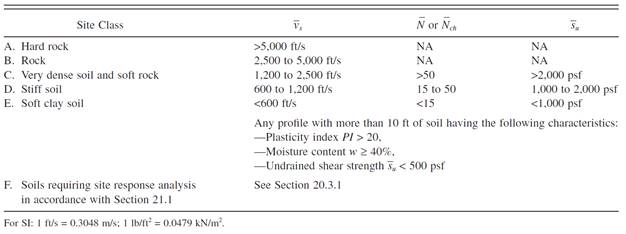
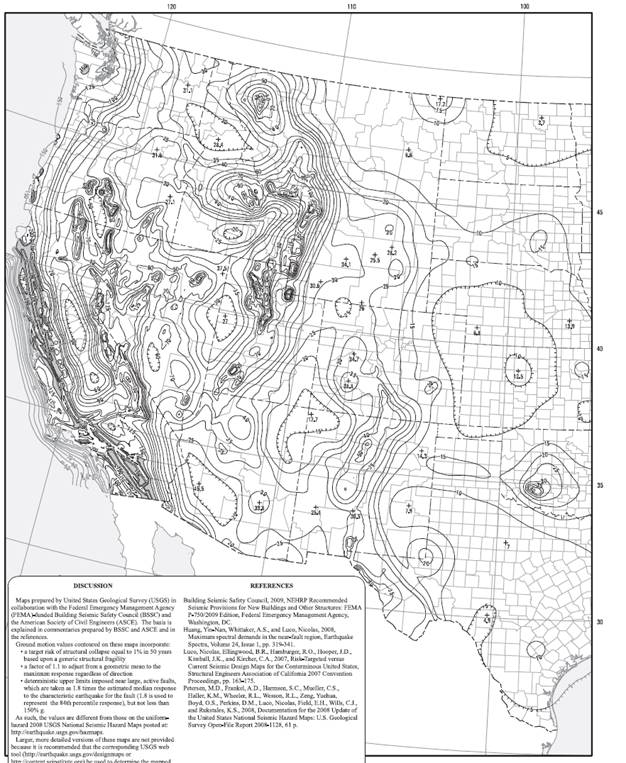
FIGURE 22-1 SS Risk-Adjusted Maximum Considered Earthquake (MCER) Ground Motion Parameter for the Conterminous United States for 0.2 s Spectral Response Acceleration (5% of Critical Damping), Site Class B.
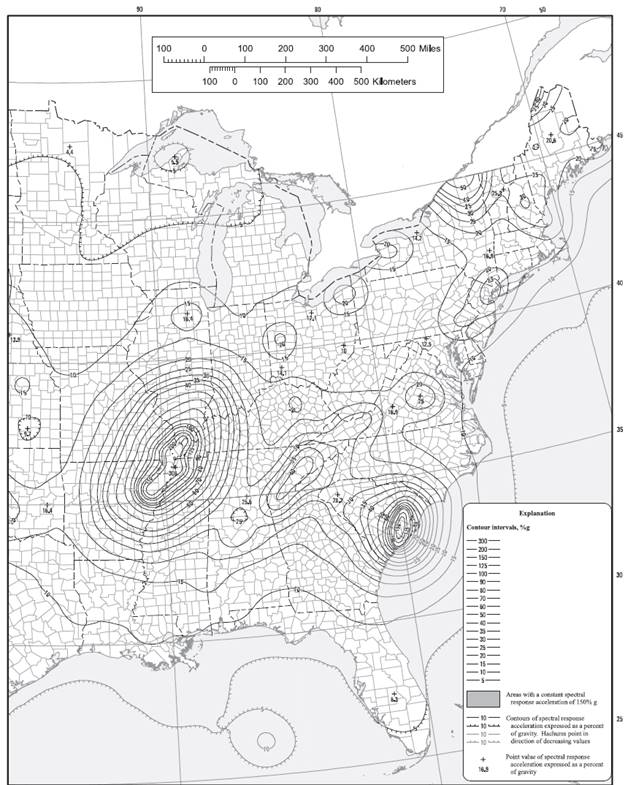
FIGURE 22-1 (Continued)
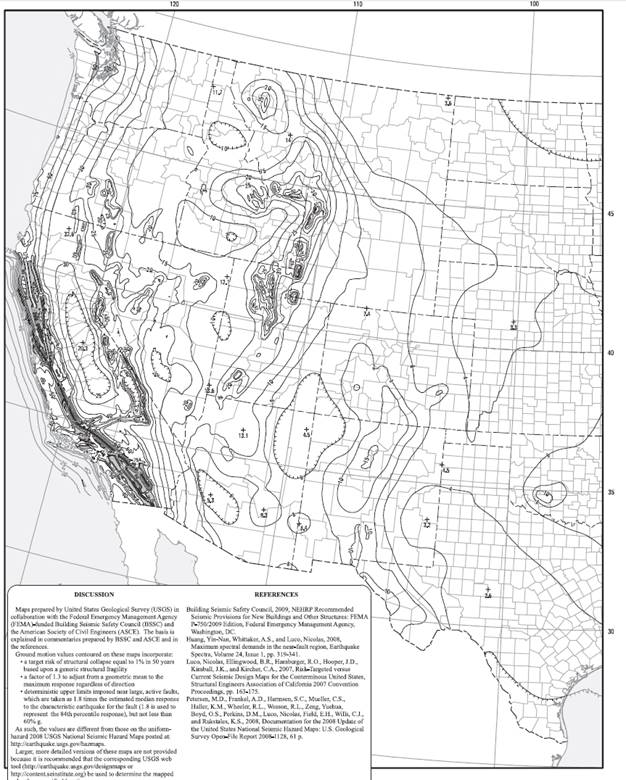
FIGURE 22-2 S1 Risk-Adjusted Maximum Considered Earthquake (MCER) Ground Motion Parameter for the Conterminous United States for 1 s Spectral Response Acceleration (5% of Critical Damping), Site Class B.
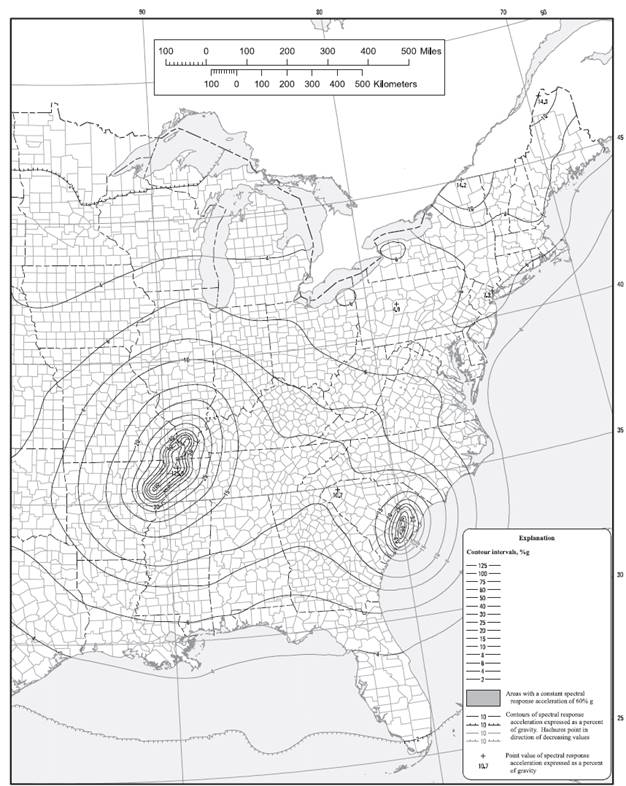
FIGURE 22-2 (Continued)
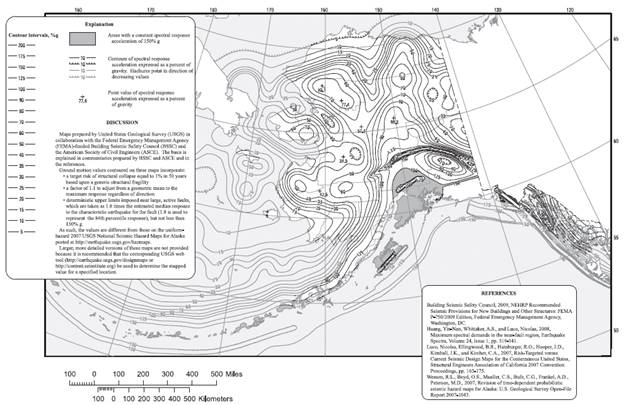
FIGURE 22-3 SS Risk-Adjusted Maximum Considered Earthquake (MCER) Ground Motion Parameter for Alaska for 0.2 s Spectral Response Acceleration (5% of Critical Damping), Site Class B.
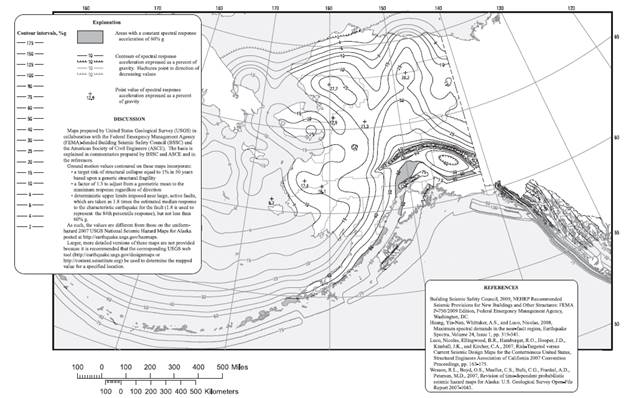
FIGURE 22-4 S1 Risk-Adjusted Maximum Considered Earthquake (MCER) Ground Motion Parameter for Alaska for 1.0s Spectral Response Acceleration (5% of Critical Damping), Site Class B.
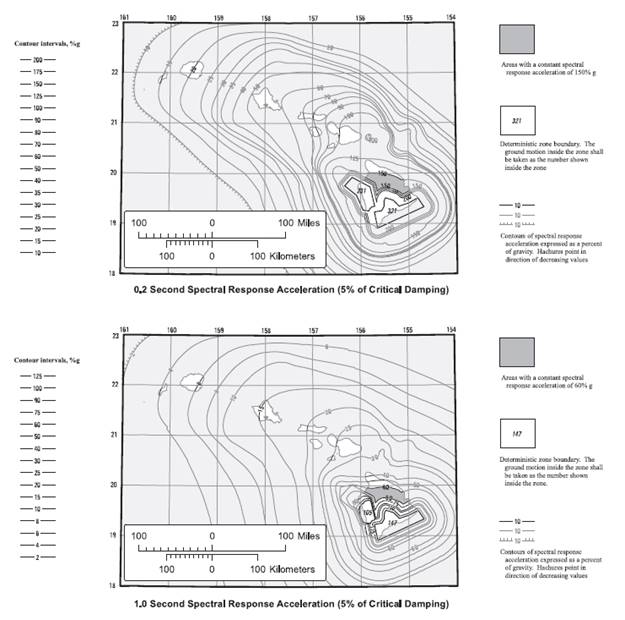
FIGURE 22-5 SS and S1 Risk-Adjusted Maximum Considered Earthquake (MCER) Ground Motion Parameter for Hawaii for 0.2 and 1.0 Spectral Response Acceleration (5% of Critical Damping), Site Class B.
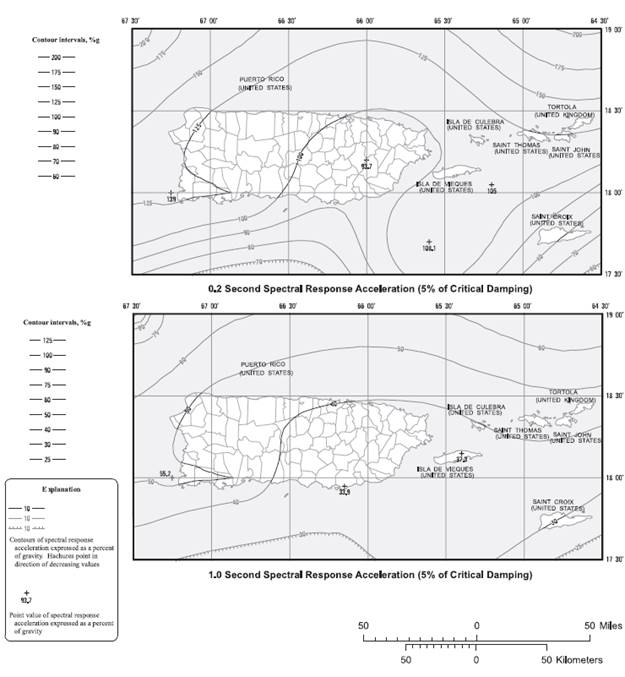
FIGURE 22-6 SS and S1 Risk-Adjusted Maximum Considered Earthquake (MCER) Ground Motion Parameter for Puerto Rico and the United States Virgin Islands for 0.2 and 1.0 s Spectral Response Acceleration (5% of Critical Damping), Site Class B.
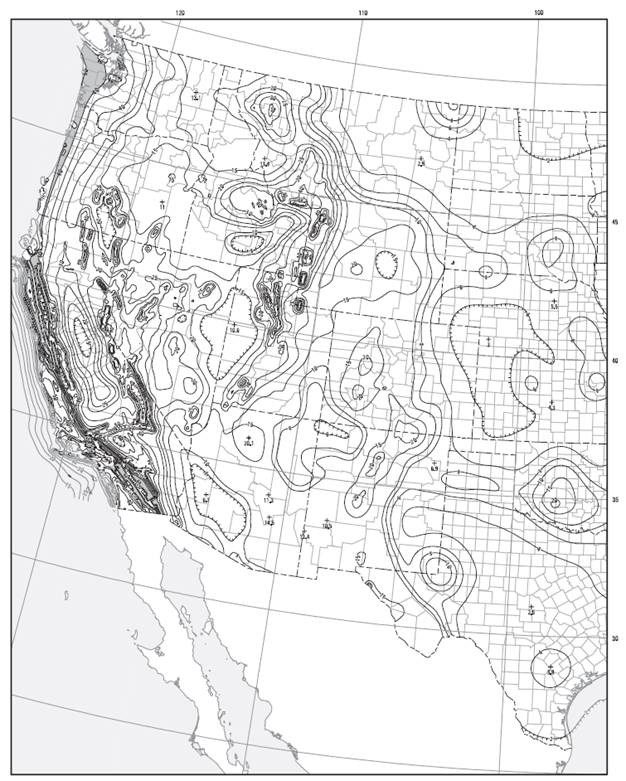
FIGURE 22-7 Maximum Considered Earthquake Geometric Mean (MCEG) PGA, %g, Site Class B for the Conterminous United States.
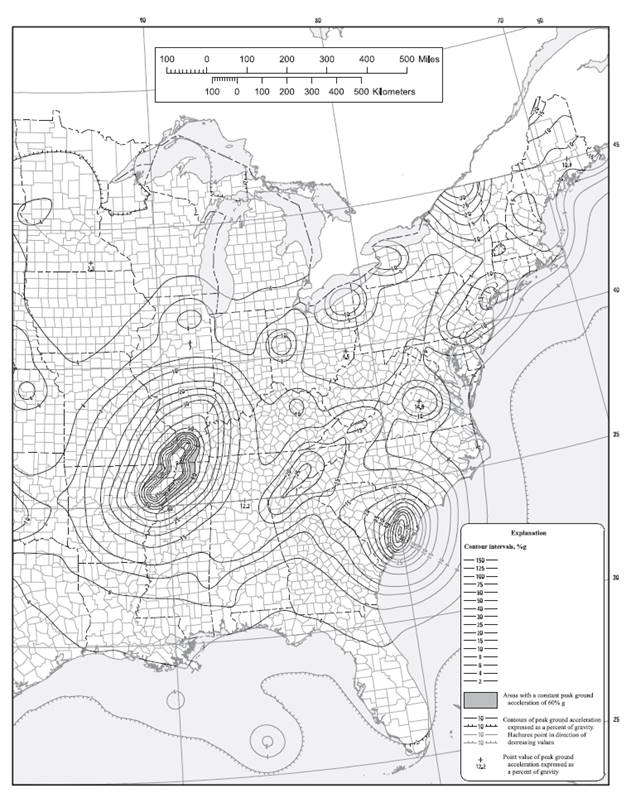
FIGURE 22-7 (Continued)
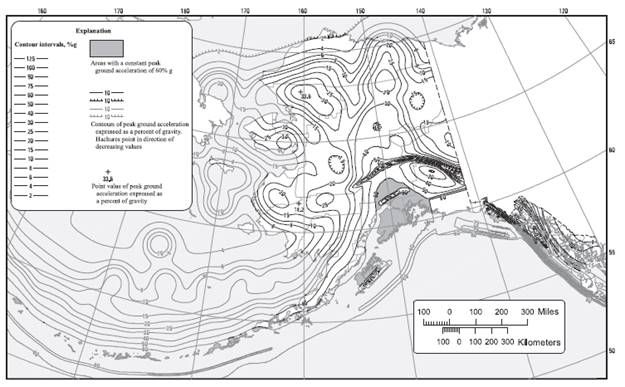
FIGURE 22-8 Maximum Considered Earthquake Geometric Mean (MCEG) PGA, %g, Site Class B for Alaska.
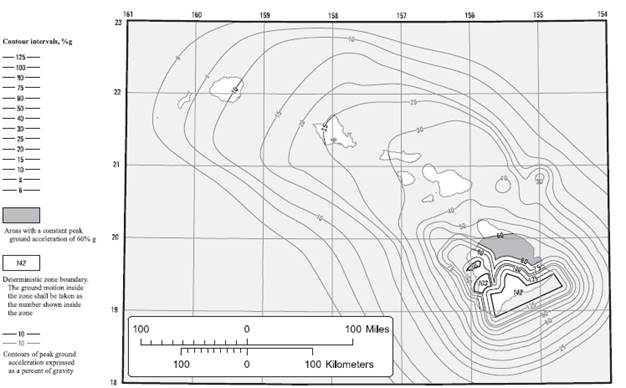
FIGURE 22-9 Maximum Considered Earthquake Geometric Mean (MCEG) PGA, %g, Site Class B for Hawaii.
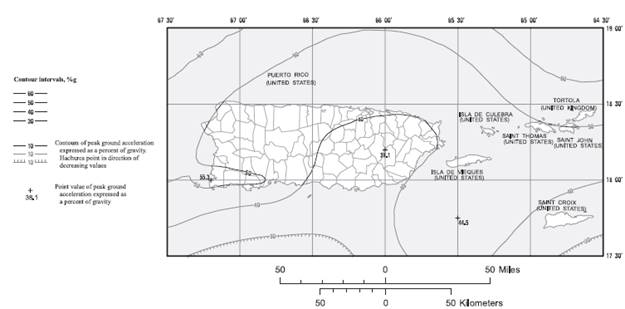
FIGURE 22-10 Maximum Considered Earthquake Geometric Mean (MCEG) PGA, %g, Site Class B for Puerto Rico and the United States Virgin Islands.
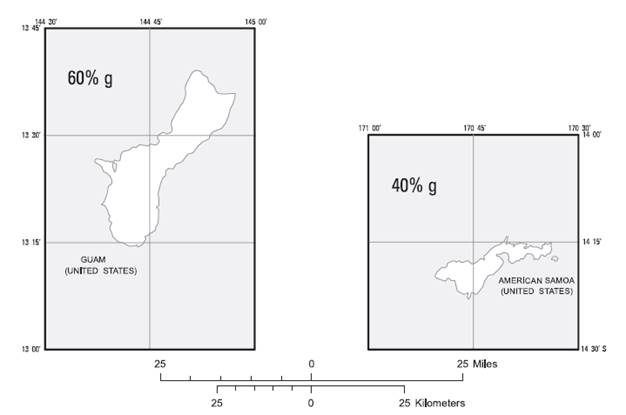
FIGURE 22-11 Maximum Considered Earthquake Geometric Mean (MCEG) PGA, %g, Site Class B for Guam and American Samoa.
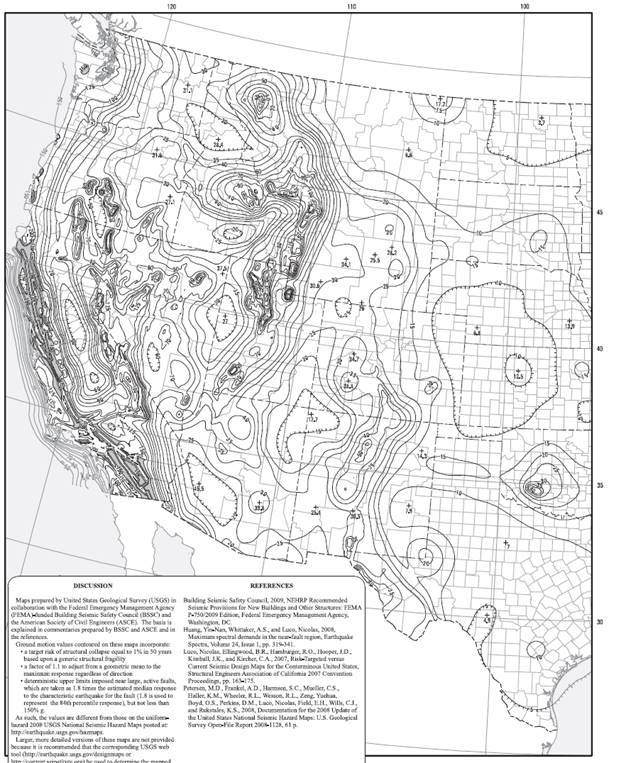
FIGURE 22-1 SS Risk-Adjusted Maximum Considered Earthquake (MCER) Ground Motion Parameter for the Conterminous United States for 0.2 s Spectral Response Acceleration (5% of Critical Damping), Site Class B.
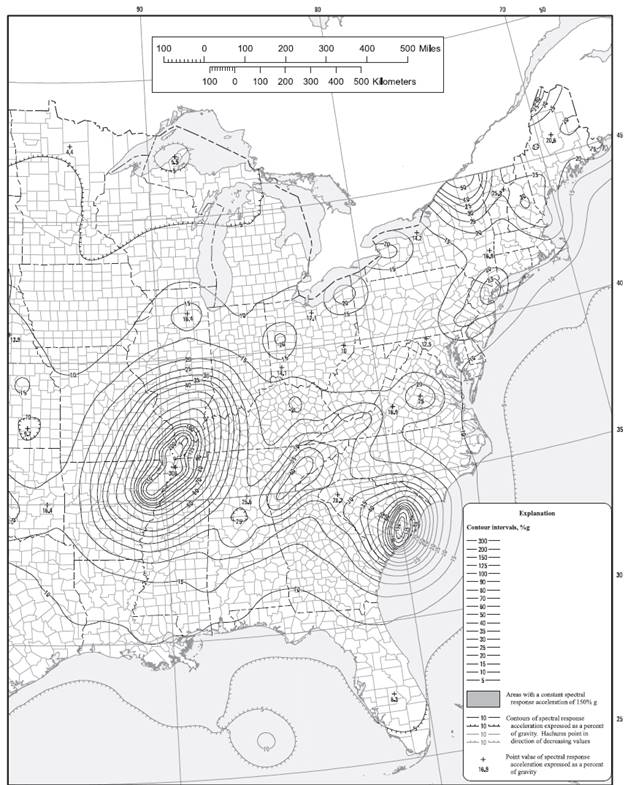
FIGURE 22-1 (Continued)
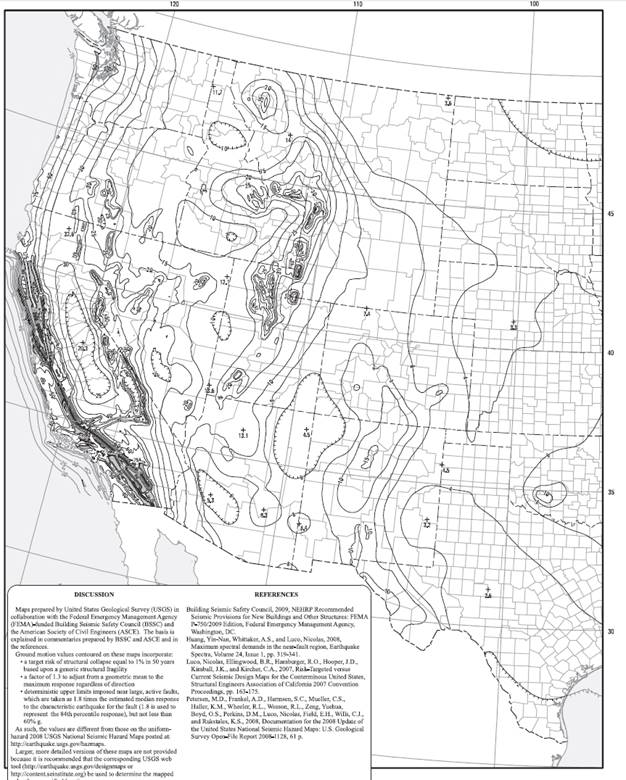
FIGURE 22-2 S1 Risk-Adjusted Maximum Considered Earthquake (MCER) Ground Motion Parameter for the Conterminous United States for 1 s Spectral Response Acceleration (5% of Critical Damping), Site Class B.
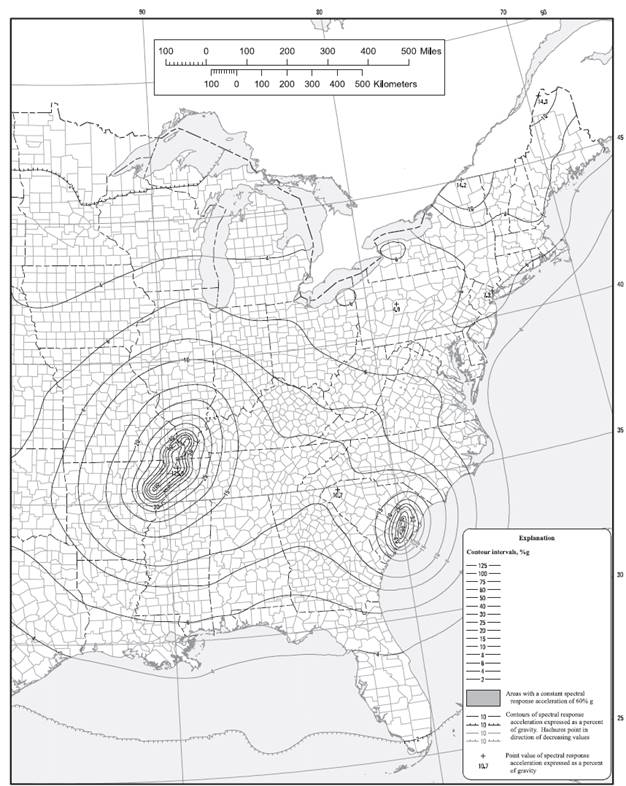
FIGURE 22-2 (Continued)
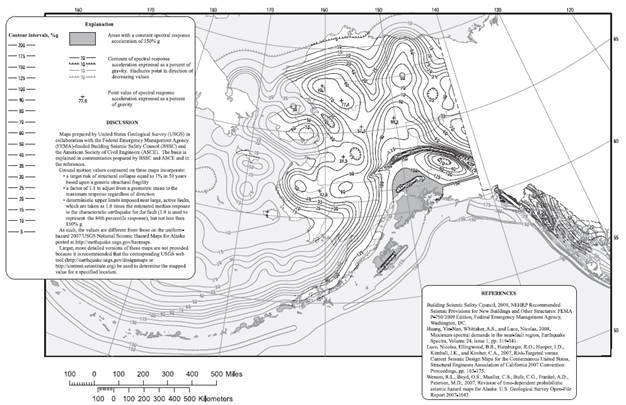
FIGURE 22-3 SS Risk-Adjusted Maximum Considered Earthquake (MCER) Ground Motion Parameter for Alaska for 0.2 s Spectral Response Acceleration (5% of Critical Damping), Site Class B.
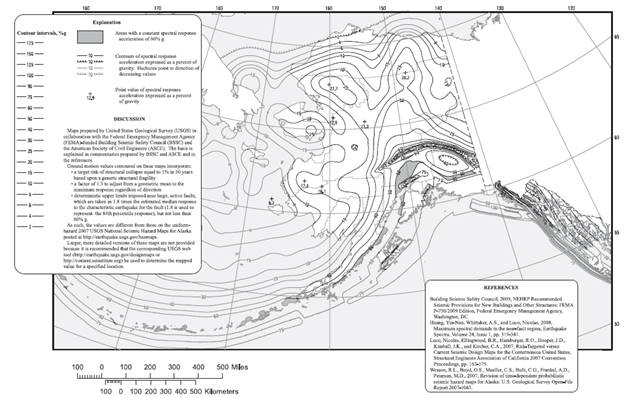
FIGURE 22-4 S1 Risk-Adjusted Maximum Considered Earthquake (MCER) Ground Motion Parameter for Alaska for 1.0s Spectral Response Acceleration (5% of Critical Damping), Site Class B.
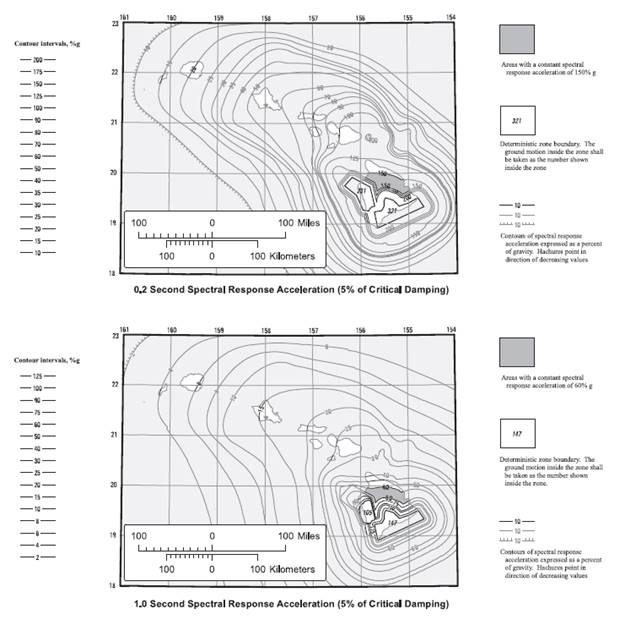
FIGURE 22-5 SS and S1 Risk-Adjusted Maximum Considered Earthquake (MCER) Ground Motion Parameter for Hawaii for 0.2 and 1.0 Spectral Response Acceleration (5% of Critical Damping), Site Class B.
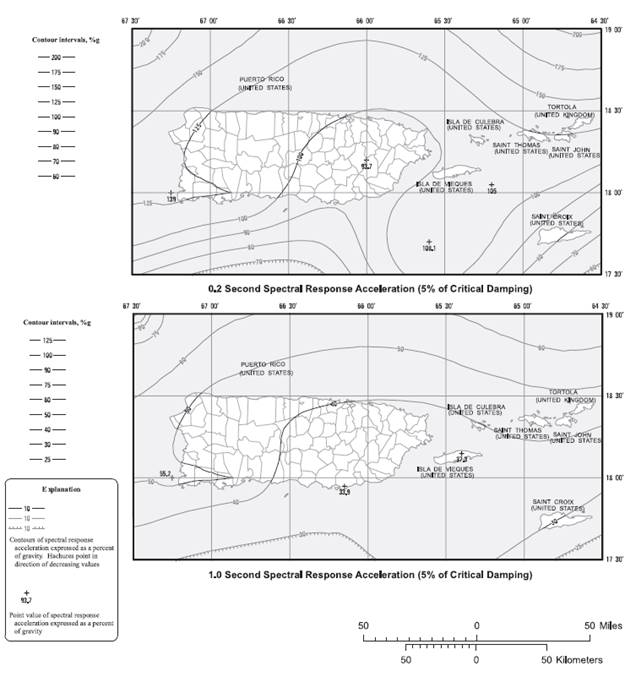
FIGURE 22-6 SS and S1 Risk-Adjusted Maximum Considered Earthquake (MCER) Ground Motion Parameter for Puerto Rico and the United States Virgin Islands for 0.2 and 1.0 s Spectral Response Acceleration (5% of Critical Damping), Site Class B.
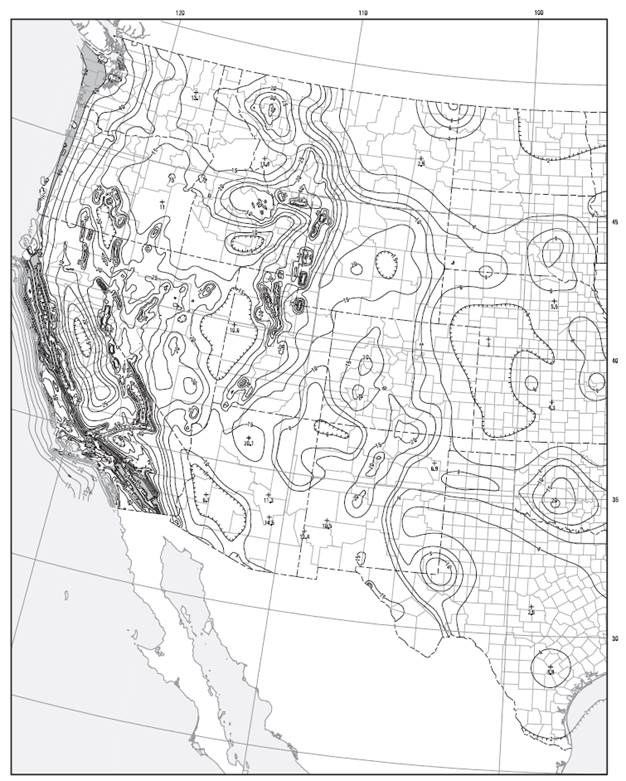
FIGURE 22-7 Maximum Considered Earthquake Geometric Mean (MCEG) PGA, %g, Site Class B for the Conterminous United States.
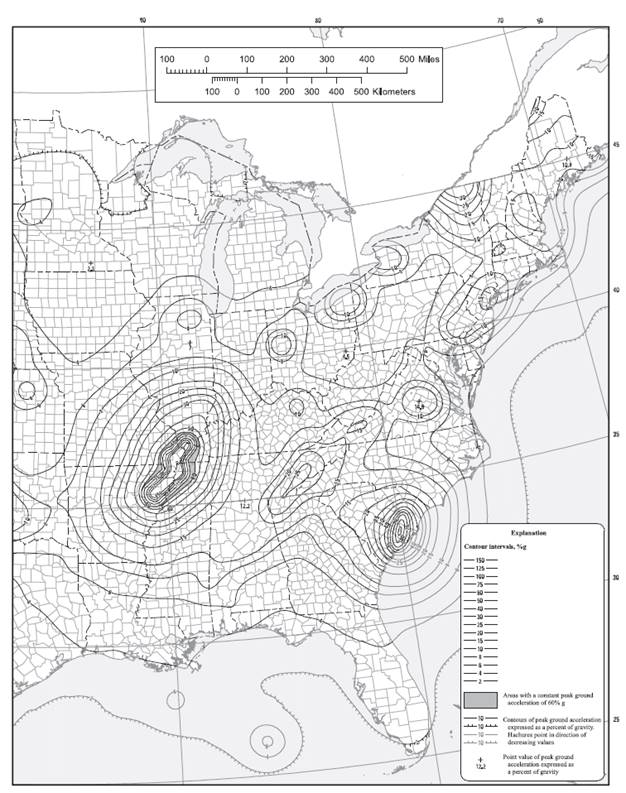
FIGURE 22-7 (Continued)
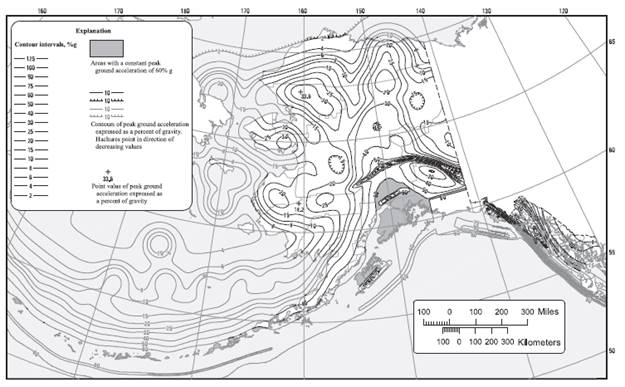
FIGURE 22-8 Maximum Considered Earthquake Geometric Mean (MCEG) PGA, %g, Site Class B for Alaska.
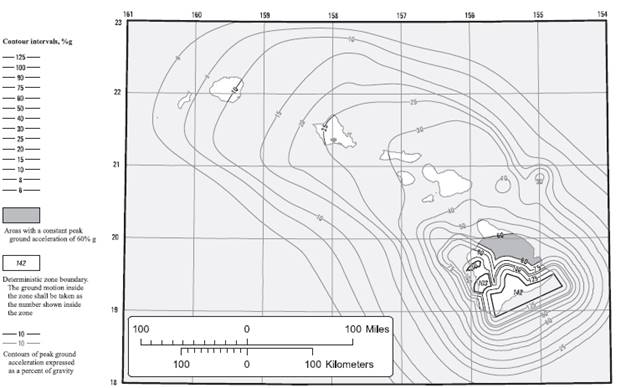
FIGURE 22-9 Maximum Considered Earthquake Geometric Mean (MCEG) PGA, %g, Site Class B for Hawaii.
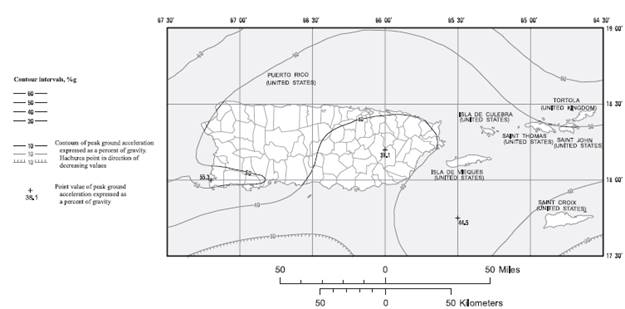
FIGURE 22-10 Maximum Considered Earthquake Geometric Mean (MCEG) PGA, %g, Site Class B for Puerto Rico and the United States Virgin Islands.
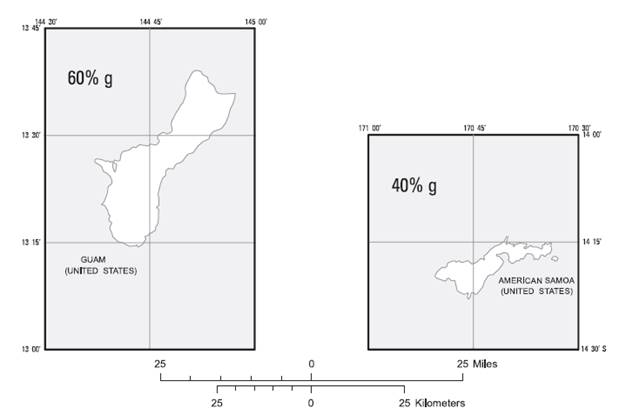
FIGURE 22-11 Maximum Considered Earthquake Geometric Mean (MCEG) PGA, %g, Site Class B for Guam and American Samoa.
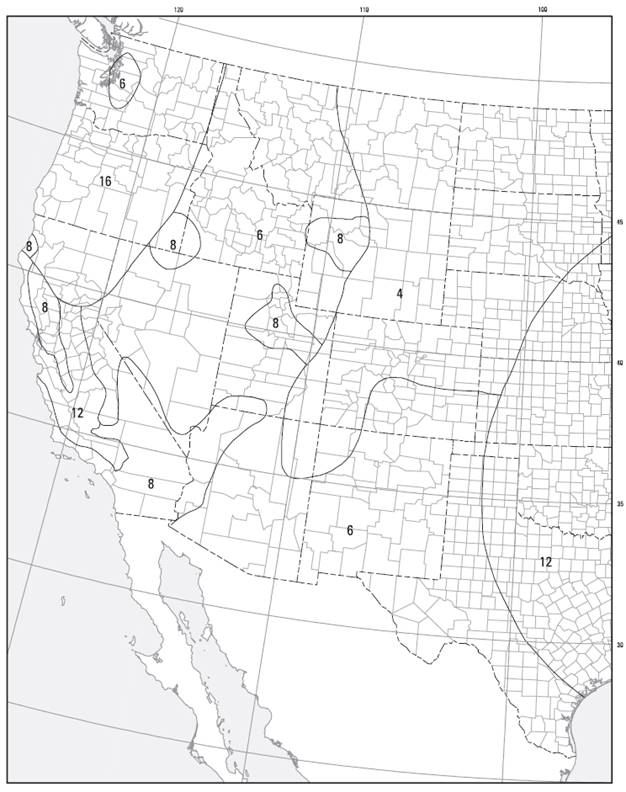
FIGURE 22-12 Mapped Long-Period Transition Period, TL (s), for the Conterminous United States.
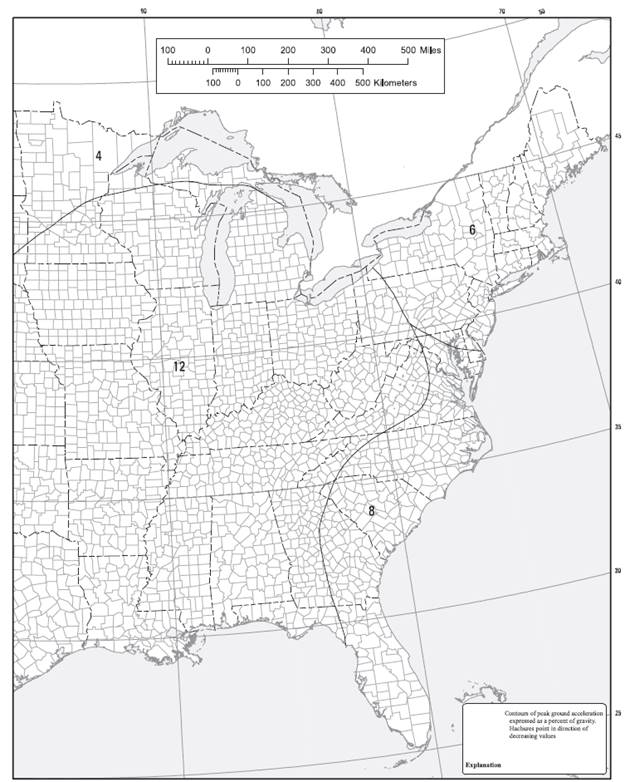
FIGURE 22-12 (Continued)
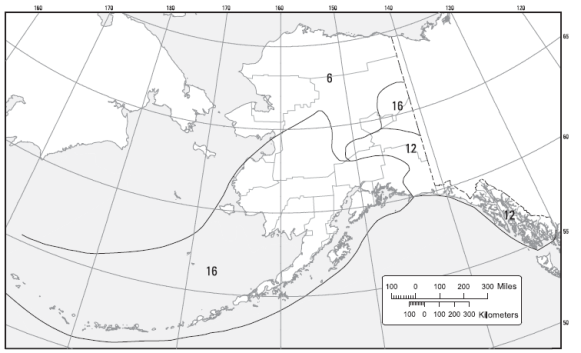
FIGURE 22-13 Mapped Long-Period Transition Period, TL (s), for Alaska.
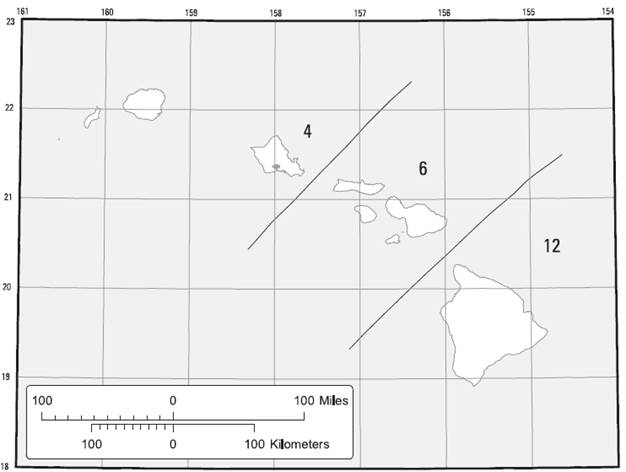
FIGURE 22-14 Mapped Long-Period Transition Period, TL (s), for the Hawaii.
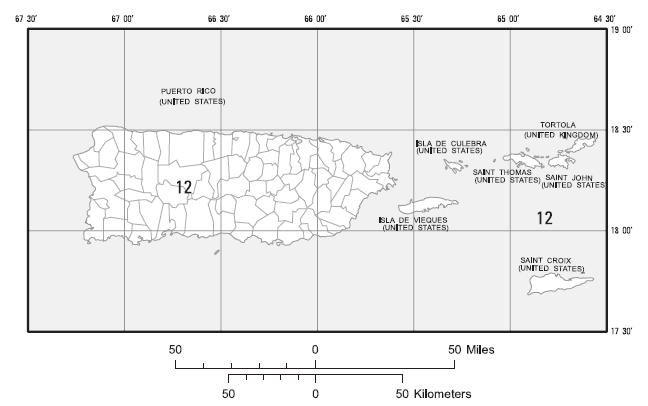
FIGURE 22-15 Mapped Long-Period Transition Period, TL (s), for Puerto Rico and the United States Virgin Islands.
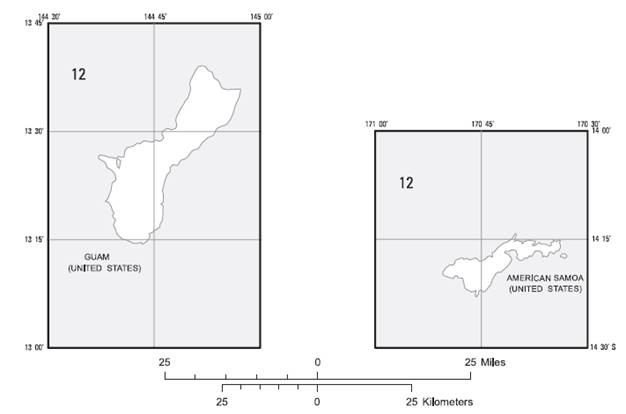
FIGURE 22-16 Mapped Long-Period Transition Period, TL (s), for Puerto Guam and American Samoa.
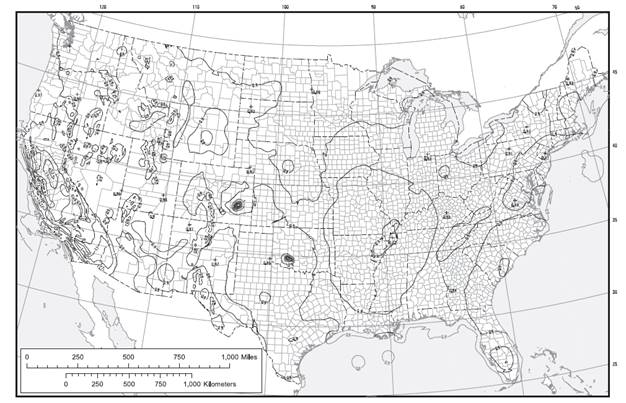
FIGURE 22-17 Mapped Risk Coefficient at 0.2 s Spectral Response Period, CRS.
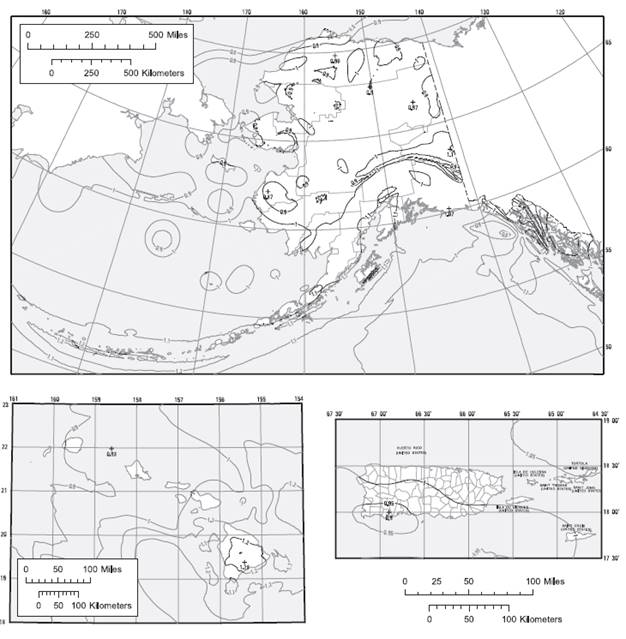
FIGURE 22-17 (Continued)
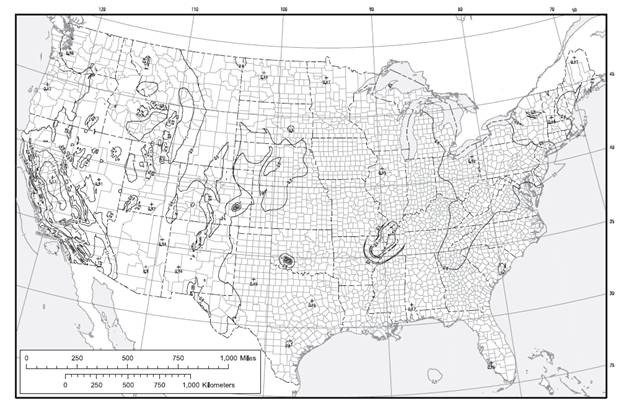
FIGURE 22-18 Mapped Risk Coefficient at 1.0 s Spectral Response Period, CR1.
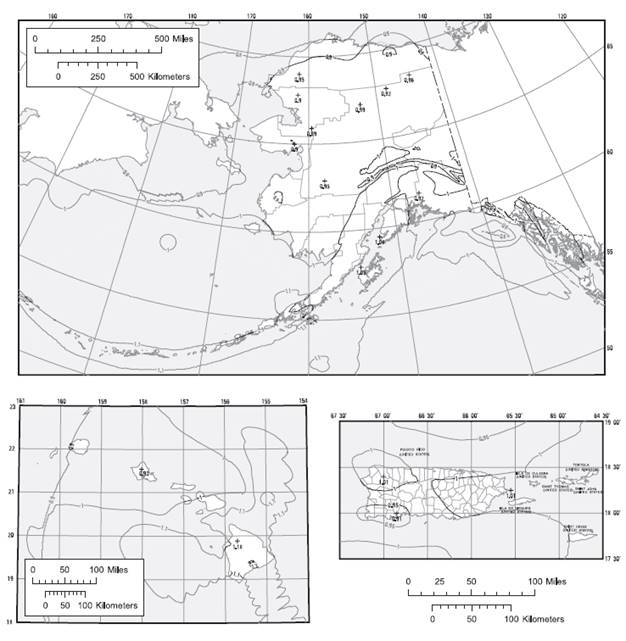
FIGURE 22-18 (Continued)
Table 11.6-1 Seismic Design Category Based on Short Period Response Acceleration Parameter
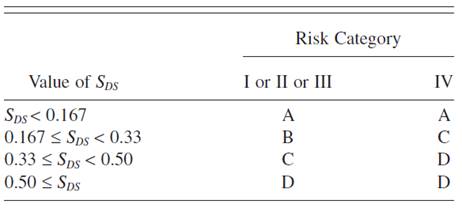
Table 11.6-2 Seismic Design Category Based on 1-S Period Response Acceleration Parameter
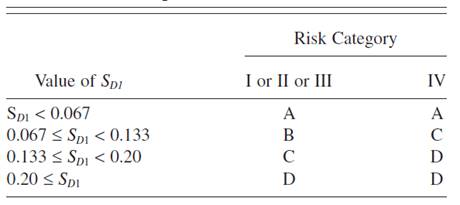
Table 12.8-2 Values of Approximate Period Parameters Ct and x
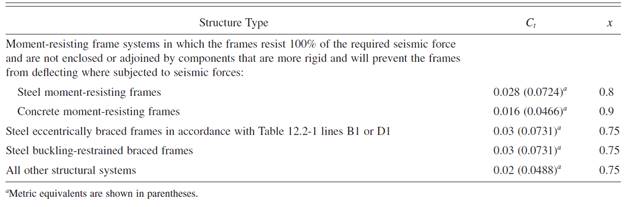
Table 12.8-2 Values of Approximate Period Parameters Ct and x
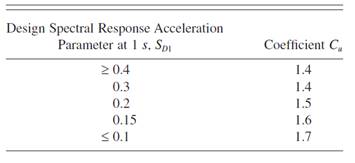
Table 12.8-1 Coefficient for Upper Limit on Calculated Period